

Words by Mardean Isaac
Photography by Sirui Ma
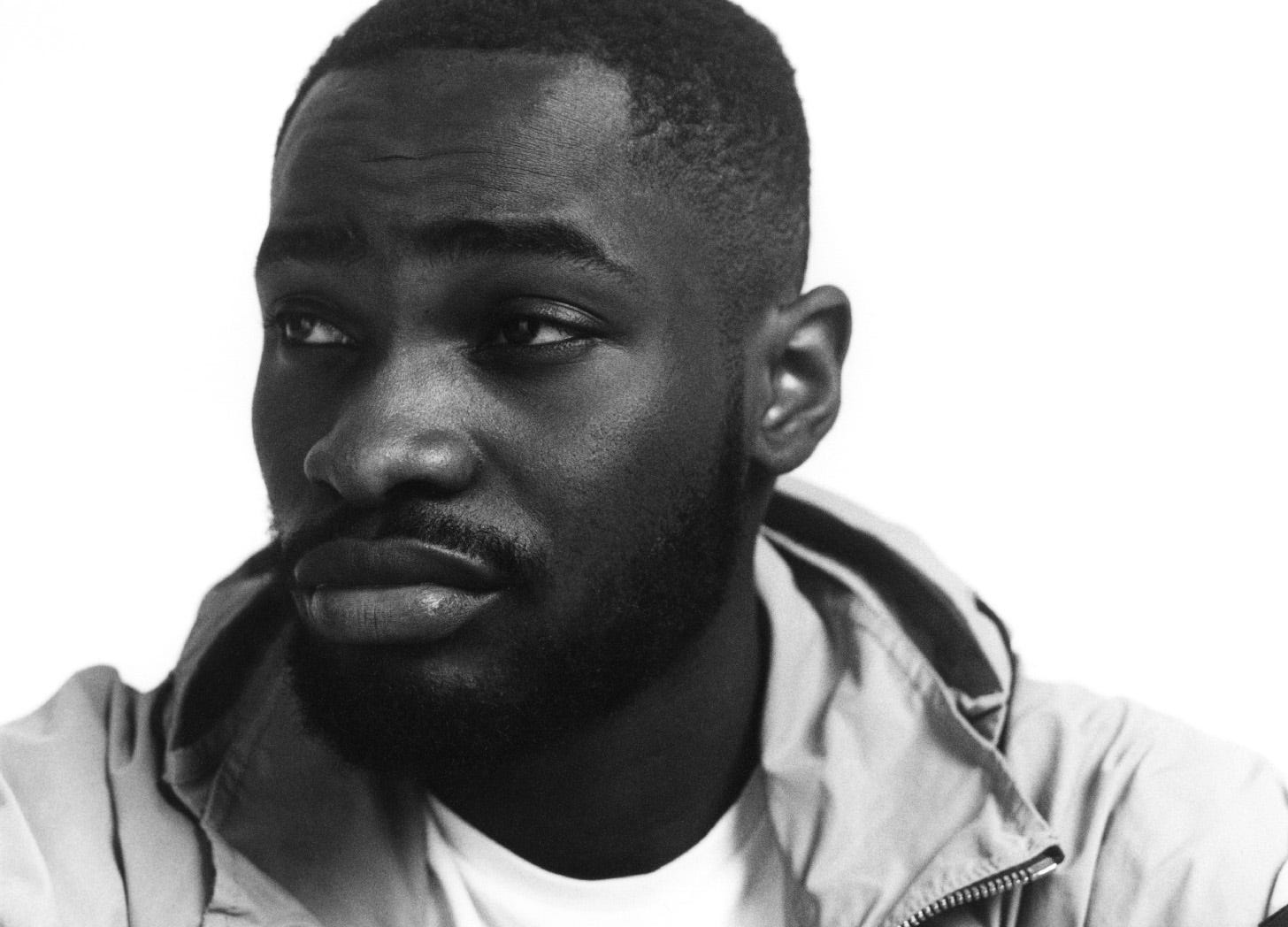
On Dave’s debut album Psychodrama, music is the mise-en-scène, and rapping the performance. Pianos set the tone, drums follow the pace—often that of reflection itself, of the time it takes to process experience. And with poise matched by intensity, Dave delivers some of the most thoughtful bars to come from this rising generation of British hip-hop talent.
In the face of contemporary forces and pressures—money, violence, fame, illusions and delusions of several kinds—Dave forges his own truth. It is widely felt that the self is a world unto itself today, and Psychodrama is testament to the art that can come from that state. Personal experiences and reflections upon them are the thread that links Dave and his audience. The album contains a comprehensive account of the hypocrisies and outright crises of his London community—a community of which he is fully part, yet critical. Awareness of this artistic perspective is expressed on the album itself (“Do you believe that I can illustrate what Streatham is, then break the fourth wall and base “Lesley” on my relatives?”), throughout which Dave displays mastery of his domain and terrain as a narrator. That mastery allows the central preoccupations of the album, like making distinctions in value and meaning—between friendships, lovers, goals, ways to live—to convince.
Psychodrama is a strikingly coherent and mature record, but Dave (who turns 21 this summer) has been building his approach—grounded in vocal, sonic and conceptual clarity—in two previous EPs, moment-stealing one-offs like “Hangman”, and a string of outstanding guest verses. The pristine, rounded instrumentation across the album allows space for his richly formed character and sophisticated personality to take centre stage. Dave’s pure delight in the sport of pun and punchline is very much on show (“I got nothing for a fed, copper for your head / And that’s the definition of a penny for your thoughts”; “Hiding cro’ inside a Rubicon drink / Which is funny ‘cause that’s how we put food in the fridge”), and his inclination towards direct commentary well served on an album-length project that seeks to counter superficiality and impulsiveness with focus. A therapist opens and punctuates the album, making comments and asking questions—in a dry, cold spoken voice—that incite responses in song form. Many contemporary conventions (hooks, featured rappers) are largely forsaken, and Dave draws on a sense of taste not bound by that of his peers or his city.
“Environment” sounds a note both urgent and compassionate. “Screwface Capital” grinds and curls, Dave’s flow both declarative and unrestful, before unwinding with an instrumental outro. “Disaster” is dominated by a sour, moody synth riff and a dirty groove. J Hus, whose collaborations with Dave have provided some of the most compelling moments in both young artists’ careers, is searing in his verses (“I’ve done some evil things that I wouldn’t take back,”) and riveting on one of the few choruses on the record.
Dave has seized upon the possibilities of the moment to create a new kind of British rap album. In chronicling the suffering and desire he has experienced, Dave finds his purpose: “The past is just the reason that it came to this / I thank God for the pain because it made me this.”
I spoke to Dave in the early evening, having just wrapped the shoot of a music video, and days before the release of the album.
BRICK: What were you most driven by, in terms of the possibilities of an album, that you hadn’t been able to explore so far in singles or EPs?
Dave: To make something of importance, that really affects and shifts the culture and music. Long-standing importance.
BRICK: Growing up, what role did albums play in your mind and in your life? Did you have a particular interest in them; do you remember being thrilled by complete bodies of work that were more than the sum of their parts?
Dave: Yeah. Albums are the soundtracks to your life. If you identify with music, if you like it, and it helps to fuel you; if it makes you aspire to things—yeah, that’s one way to describe it: the soundtrack to your life. If you relate, you relate; if you identify, you listen.
BRICK: Even looking at the early freestyles you did, on Black Box or Street Starz for example, you were already working on the structure and internal direction of those raps, even though they were just freestyles. Did you always have that sense of a bigger picture: a musical, emotional narrative?
Dave: You know what; I’m a weird one, because I work on my structure, I try to improve—but at the end of the day, my life is one big freestyle. I’m freestyling everything in life: what I do day-by-day; phonecalls, when I speak to people; definitely in my lyrics. So it’s interesting how on the album, only four out of the eleven songs have hooks. When it comes to structure, I feel like I’m keeping it freestyle. That’s my natural inclination. That is my structure.
BRICK: And what about your formal understanding of music, do you think that’s enriched your understanding of writing as well? Do the two work together?
Dave: Of course. It definitely helped; they complement each other. Having some background knowledge just allows you to be even more involved in the process of making an album.
BRICK: I was thinking of the concept of resolution: there’s a lot in terms of the chords you use, but also the narratives and the emotions in the songs. I feel like you’re playing with subjects like that, in a very intuitive but also conscious way, on this album.
Dave: It’s one thing to be able to articulate yourself with words; it’s another to be able to articulate yourself with music. When the two go hand in hand, I feel like you really feel it. Before I might have known what I like, but I couldn’t put it into words. Having an understanding of music now definitely helps to convey whatever emotion I’m trying to, whether it’s positive or negative or all of the above.
BRICK: Did you audition the therapist, and did you write his words, or did he improvise them?
Dave: That was something that came through actually going through the album tracks and actual conversation really. It wasn’t one of those heavily choreographed things, you know? It was very natural, it just sort of happened in the way that the journey of the songs actually plays out.
BRICK: On “Black” you say, “Black is so much deeper than just African-American”. Do you feel like black people or black culture outside of America has lived under the shadow of the image of African-Americanness?
Dave: It’s definitely a tricky one. I think that’s a multi-faceted lyric. But it’s my sort of way of saying that someone can try and make a blanket statement about someone who is black and just say ‘African-American’, but there’s so many different actual layers to it: there are so many different cultures within Africa, so many different forms, and they’re so vast, you know? And I think the statement ‘African-American’ can sometimes be used in a way that doesn’t really allow for people to be super in touch with their background. If someone asked where I’m from or what my nationality is or what my heritage is, I wouldn’t say I’m just African-British, it would be specific: Nigerian, Jamaican, Caribbean, or you’re from Ethiopia. Not just the blanket statement of a continent—it’s deeper than that, you know?
BRICK: I’m struck by this pairing of Caribbean and African culture and music that’s happening in London or in Britain, especially given that as a Caribbean or African diaspora there’s a more direct link to those places here compared to African-Americans who were severed from their heritage so many hundreds of years ago. I’m wondering about that incredible line [“it’s Somalis I roll with / so it’s akhi/ackee on side like saltfish”] on “1800” with Headie One, because that pun plays on that link: the word ‘akhi/ackee’ is a kind of pivot or hinge between Caribbean people and Africans. I was wondering what you think about that line in relation to the question of blackness.
Dave: You know, trying to be more so inclusive than decisive: I think that’s my thing. My Somali friends are my aks; and my Jamaican friends are my brothers, or my guys, and that’s what it was about. Not really trying to make it about what is ‘the most’. I mean, sometimes people feel like their version of whatever it is, is the ultimate version. And I think that’s what it’s about: the black British experience, and that’s what I’m narrating in the song, but that’s as far as I can narrate. I have no clue as to more than that, really. And it would be unfair to try and speak on the black American experience, in the same way; it would be unfair for me to speak on the black French or black Aboriginal experience.
BRICK: As a black man in Britain do you feel like you have access to the whole musical and cultural heritage of black people everywhere, including in Africa, or do you feel like there are certain barriers or differences that are difficult to overcome or reconcile?
Dave: I feel like Britain’s a good place: there’s access, we’re very in touch. It’s not very far removed. Your parents, in a lot of cases, have come directly from the country, or it’s a generation or two. So it’s not necessarily crazy far removed. It’s something that we’re just immersed in. And music is the same: we still support our artists and listen to our music and that’s an influence on all of us.
BRICK: In terms of psychology and art, there’s a really good line on the record about suicide only moving pain, this concept of pain as a quantity that flows between people, that you can’t really get rid of: you’re just increasing the pain of others even in taking your own life, essentially. Is there a connection in your mind between taking your own pain away through music and helping alleviate the pain of others?
Dave: Yeah. Nothing’s ever created or destroyed when it comes to energy. What I think is: if I can alleviate my pain through what I do in music, then hopefully I can transfer the same feeling towards the listener, and do the same for them. That’s what it’s about, really. It doesn’t stop the pain, but I think that Psychodrama as an album is a good journey between feeling like you want the pain to stop and feeling upset, and coming to embrace it and understand that it shapes you. Towards the end of the album, that’s the connection I made; what was discovered on that journey.
BRICK: There’s a lot in your work and on this record in particular, about distinctions: things that matter and things that don’t; what’s real and fake; what’s hypocritical and what’s truthful. But also the question of time: how distinctions and the consequences of decisions based on them can shape you and change things. Are you interested in these questions because you’re reacting to what’s around you? Because we’re living in a time where language itself, and questions of reality and image, are being constantly degraded and deformed. On this record, are you trying to encourage people into thinking more clearly about things?
Dave: I’m definitely trying to make people look at things from a clearer perspective. On tracks like “Black”, “Legend”, “Purple Heart”, and “Environment”, it’s definitely about shaping perspectives and changing things and hoping people listen to the album and learn something. That was my overall goal. Like I said in “My 19th Birthday” a while back: “We do have thoughts, but nobody’s thinking”. I think that’s flowed through into this album. Not only has that flowed through in what I’m trying to show people, but what I’ve displayed in the album. How ignorant a lot of my first views were—on the first track, the second track—and as the album goes along, just getting wiser.
BRICK: Do you remember the exact moment when the Ralph Lauren line [“man are not bad in person / I’m with guys that are riding solo / that’ll do it like Ralph Lauren: / that’s one long stick and a blacked out Polo”] on “Peligro” with Giggs came to you?
Dave: Yeah, I was in Germany, actually. I was writing for a different song: I had it there for a different song. And then I was writing the “Peligro” verse and it just kind of made sense and worked, but I had to change it and tweak it. I was coming back from a festival in Germany, and I was thinking: ‘Polo, Polo… how do I work with the word Polo?’. Then I realised I could use it like the car and also like the sport. And I thought about who plays polo. And so, Ralph Lauren. “One long stick and a blacked out polo.”
BRICK: You were in Nigeria recently. What was it like?
Dave: It was amazing. Definitely a great experience, to go home: to be back in Nigeria, to be in touch with the world that I came from. What the reality is there day in, day out. It’s a beautiful place. It’s so different to what I’m used to. Different in a good way; I’ve definitely embraced it. I had a lot of fun. It’s a completely different world and culture, but it’s beautiful.
BRICK: Did you spend time with musicians there?
Dave: No. I was just there for two days. I just got to see local people; walking through markets; pretty general stuff.
BRICK: This series of features you’ve done with guys who, when you’re rapping alongside them—guys like Fredo, Giggs, Headie one—they have far more direct street content. And you’re on the other side observing, chronicling, commenting on that world. Is there a sense that these guys that you rap with are standing in, on the track, for your brother? Almost like an attempt to be with your brother; or speak for him, or with him, or to him.
Dave: No. I wouldn’t say so myself. Those are just the artists that I work with, that are in the UK. Basically everyone in this scene has some element, at some level, of experience they draw on. And in our case, where we’re coming from in London, when you’re young, the vast majority are drawing from a similar experience that we all face. I think that in terms of me speaking about or commenting — narrating — about it in an observational way about things that are happening from a street level, it’s just because of the fact that I’ve been doing it for a while, and there’s a level where I think anyone kinda understands that music becomes your life. It’s a whole different ballgame when you’re three or four years deep in.
I think that everyone will have to go through that phase, or reach a crossroad in their life where they have to choose between music or everything else that could be calling. When I was 16 or 17, I was young and I was first making music, of course I was charged up, talking about the stuff I would do everyday or the stuff I would do tomorrow. But I feel like as I hit 19, 20, there’s a whole bigger picture of changing your perspective in general life, and it affects the way I make music.

This story was originally published in BRICK Edition 07, released in 2019.
That issue is now sold out, but to make sure you don’t miss any future issues, join our paid tier on Substack and get every issue sent direct to your door.