
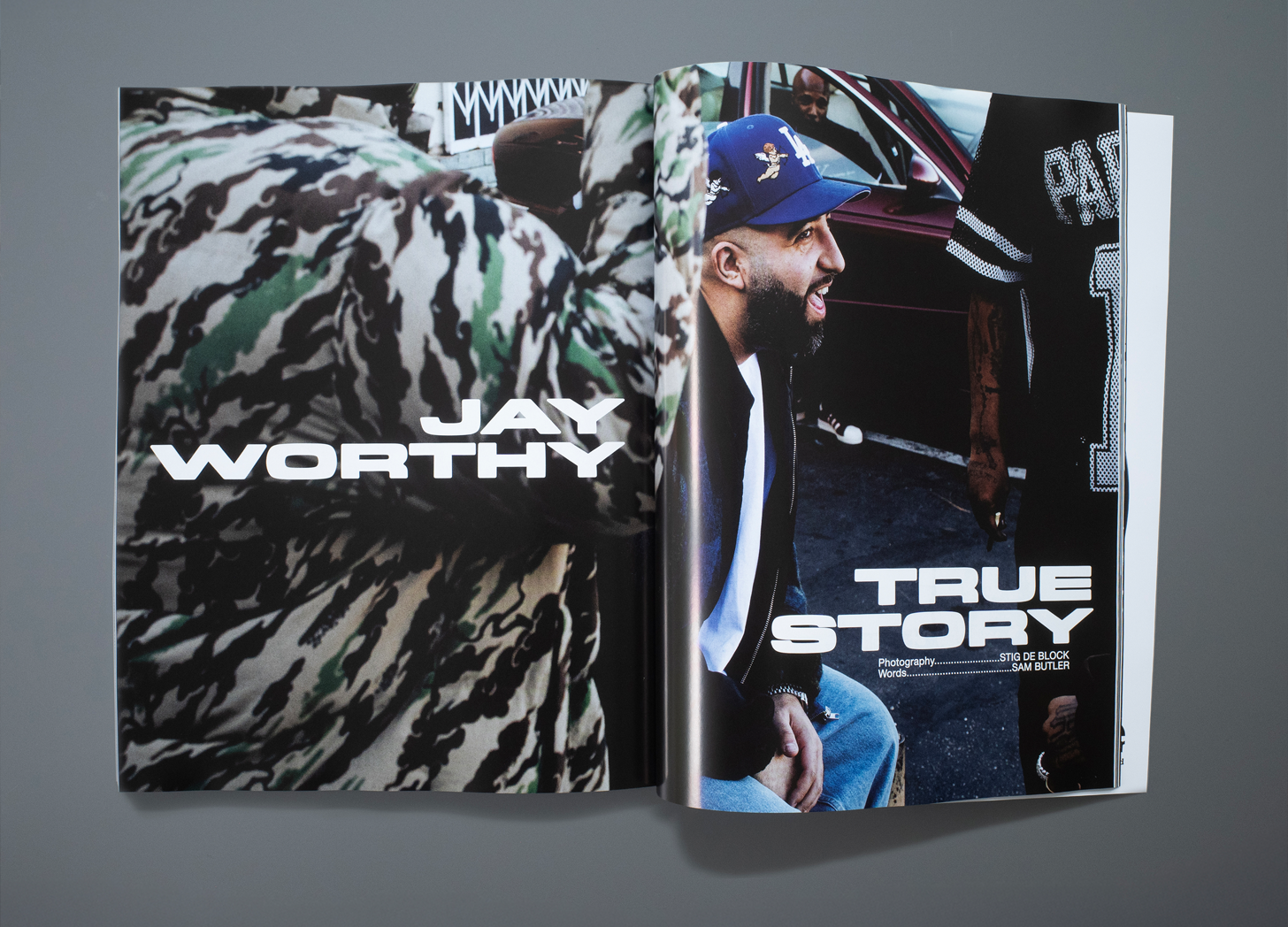
Words by Sam Butler
Photography by Stig De Block
The last Blockbuster Video store stands in Bend, Oregon, a relic of another era. Rows of plastic clamshell cases, a fading rainbow of weathered coloured dots stuck on each spine, shelves bearing the memories of weekend movie nights of bygone decades. Physical media like that carries a different kind of gravity - something I hope you’ll recognise as you thumb through the pages of this magazine, too; it takes up space in your house, it ages with you, it reminds you what you’ve kept close.
Jay Worthy is familiar with that feeling. His newly-renovated Los Angeles apartment could pass for a satellite Blockbuster branch if you gave it a lick of blue and yellow paint. VHS tapes line the walls in neat blocks: Once Upon a Time in America, Boyz n the Hood, Scarface, Friday. They aren’t there for decoration. They’re an inspiration, a tangible connection to his formative years. These films shaped the way he saw the world, and now, they’re shaping the way he wants the world to see him - becoming source material, a catalog of references to draw from as he constructs the scaffolding for his first solo record.
“This album is like a movie,” he excitedly explains as I survey his collection. “I think it’s going to be the best music that anybody’s heard from me. The concept on the album is Once Upon a Time… but really it’s just walking you through the different stages of my life, lyrically.”
For years, Worthy’s life story has been told in fragments; often shrouded in mystery, or distorted by association, the conundrum of how he connected to so many pivotal figures and moments remaining unanswered. As we settle on the U-shaped leather sofa positioned in front of the outsized TV screen, he’s keen to shed some light on how he got here, and how he became one of hip-hop’s great unsung forces.
The story begins on East 58th Street in Vancouver, in a neighborhood known as Little India. Worthy’s first exposure to rap came through his father and the older kids on the block. “I guess everyone wanted to be like Cube or Eazy, so everybody was wearing Kings and Raiders stuff,” he remembers. His first tapes were Eazy-Duz-It, AmeriKKKa’s Most Wanted, the Geto Boys’ We Can’t Be Stopped, and Spice 1’s self-titled debut. His dad played “The Message” on car rides when Worthy was still a toddler. By four, he was already imitating Willie D’s growl into a toy microphone, as he stomped around the house, voice lowered to sound like a grown man. “I wanted to have a deep voice like him,” Worthy laughs, “so I would make my voice all deep when I was rapping.”
As he grew, he nurtured his musical talent without ambition or expectation of a career as a performer, explaining “I just loved making the art. I loved making music privately, but I don’t think I ever wanted the whole spotlight.”
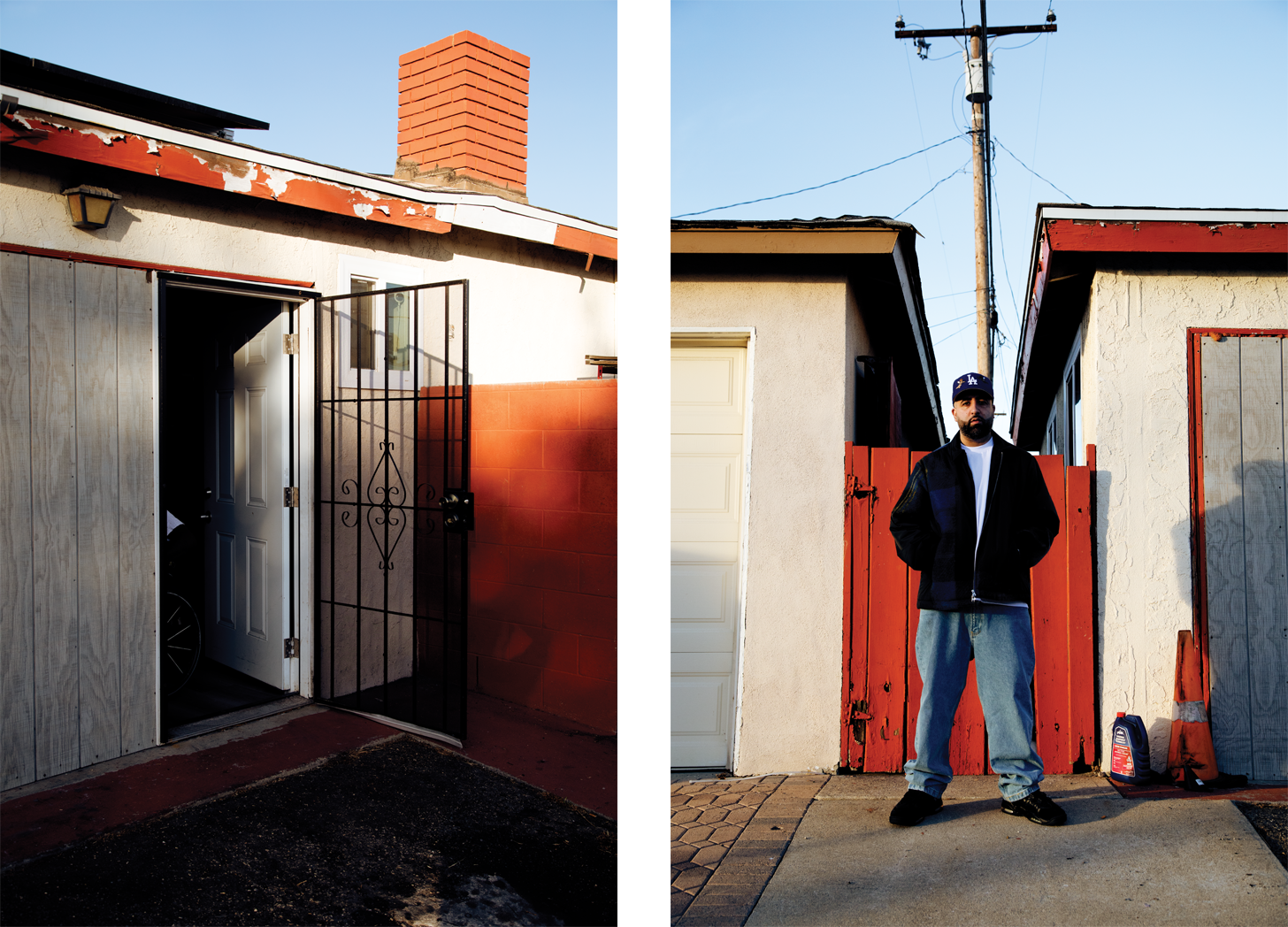
In his teens, street trouble in Vancouver necessitated a change of environment. “I was involved in a situation that meant it wasn’t good for me to stay there, so I left,” as Worthy succinctly puts it. Although his departure was not by design, it would prove to be the pivotal moment of his life. With an aunt in San Diego was unwilling to take him in, he relocated to Los Angeles, where some other relatives had connections. “I already had homies in Compton through some of my older relatives that came down here through the years,” he explains. “They took me in, and that’s how Compton became my neighborhood at 17 years old.”
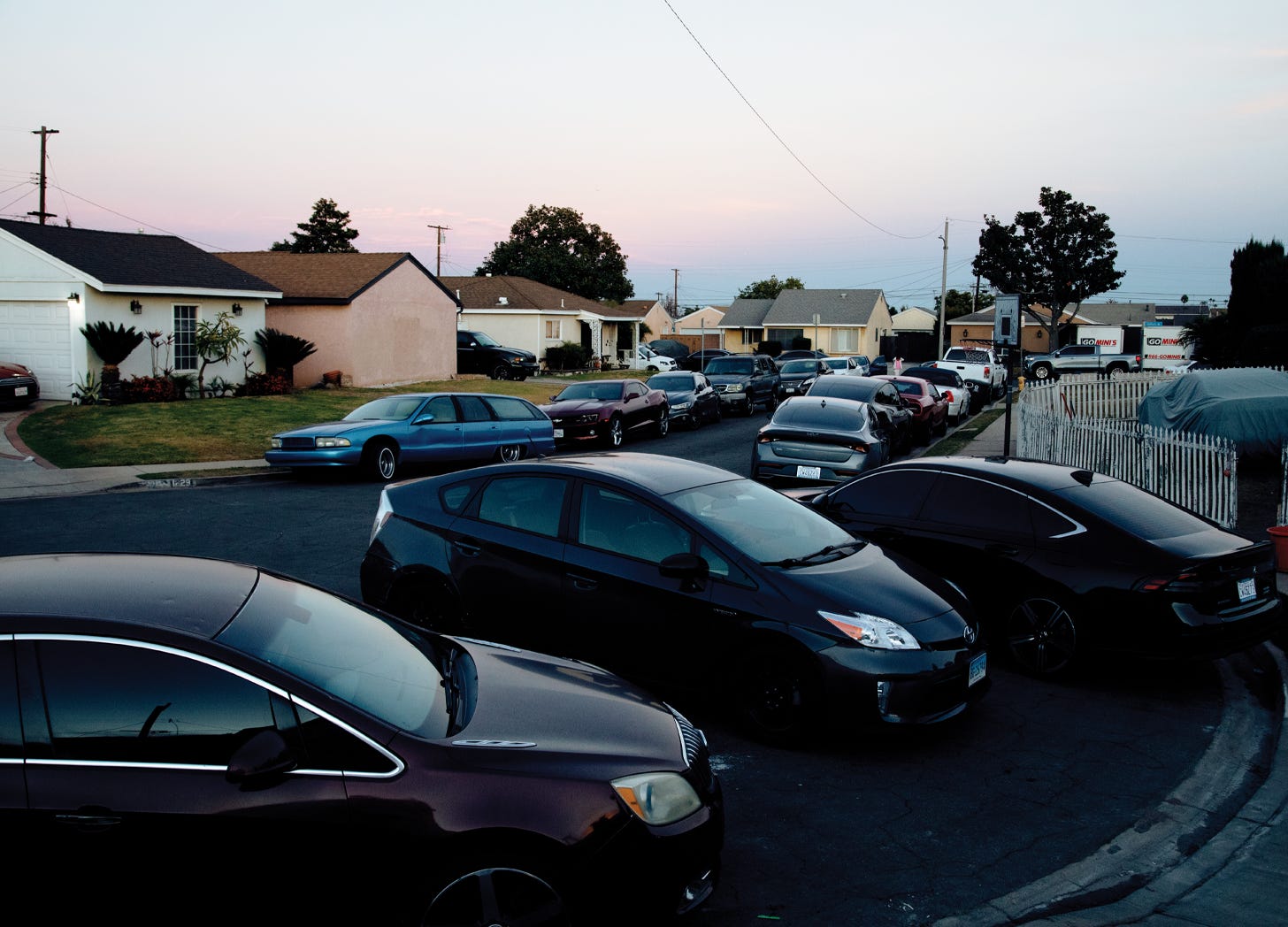
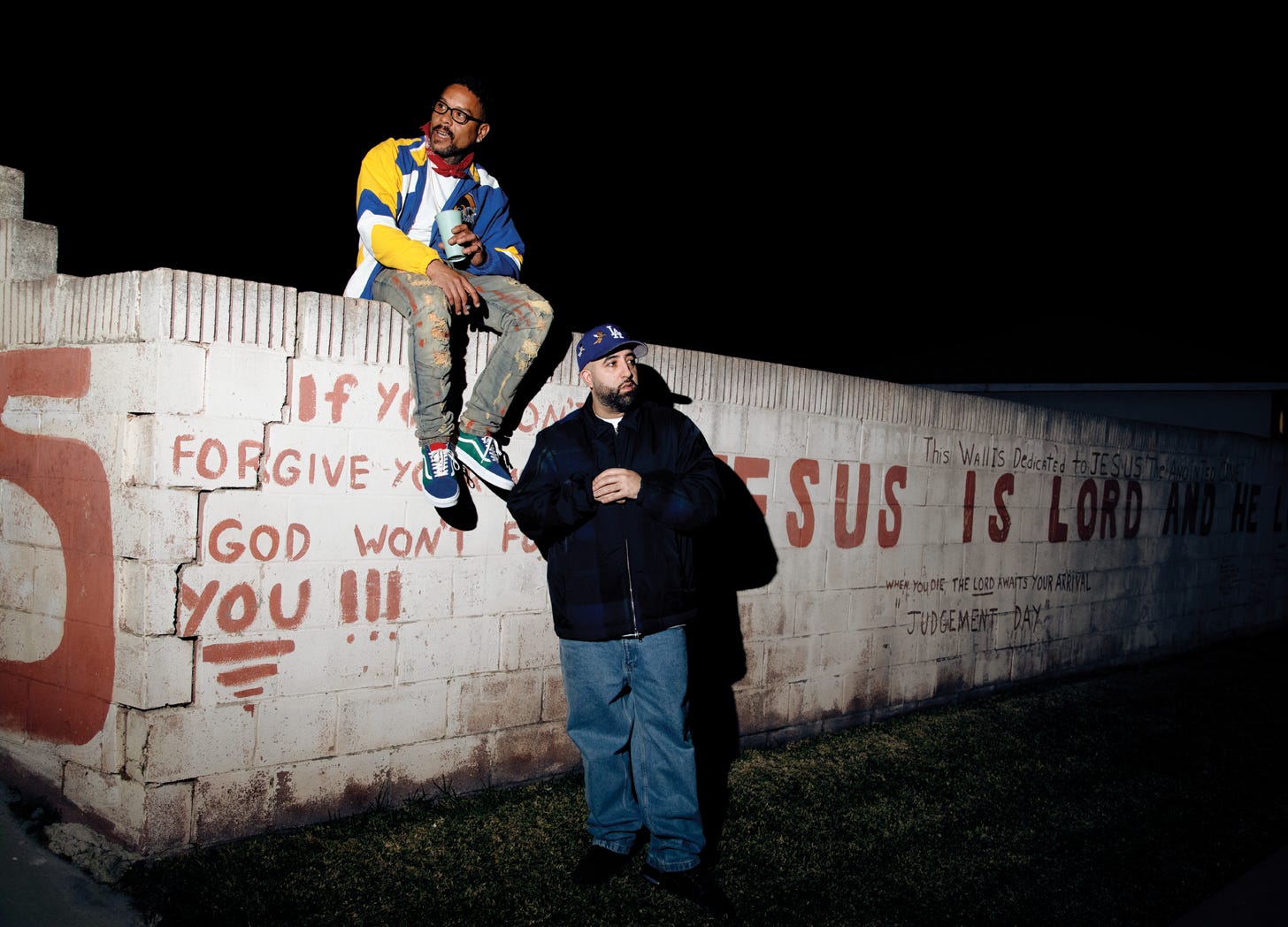
The links were already in place. “The homies that I knew from back in the day in Vancouver were tied in with the whole neighborhood out here. They also happened to be from the red side of things. So, they became my partners.” Those connections also pulled him into Bloc Stars, he explains while spelling out the acronym: ““Black Leaders Overcoming Criticism, Succeeding Through All Restrictions. They were a very influential clique in LA, but they had strong Vancouver links. So that’s where my whole tie-in came from.”
For Worthy, the connection was more than affiliation. It was a network, a social fabric operating on the same cultural codes he already knew from Vancouver. “I just slipped into street shit, and didn’t give a fuck about rap,” he recalls. “I remember I went to a party for The Game’s album, and noticed that all the guys getting the most respect and love in that room were the real gangsters. So, that’s what I wanted to do.”
His local business interests led to him operating on Fairfax Ave., where the prevalence of stores like Supreme attracted a tribe of kids who were skating, rapping, writing graffiti, offering echoes of the creativity he’d grown up around. “That kind of gave me a flashback to my time back in Vancouver, being around cats that were skateboarding and doing all different art forms,” he says. “And that was all going on on Fairfax. It was inspiring to see, but at that time I was still heavy on my banging shit.”
In his mid-twenties, a court appointment brought him back to Vancouver. Worthy’s father had by now re-married, and it was on this trip back home that he first met his stepsister - a fellow Vancouver native who had begun making fantasy-inspired synth-pop under the name Grimes. “Everybody gets this part of the story so fucked up. I don’t like talking about it, but OK,” he sighs, before quickly summing up the particulars of the family tree: “My pops remarried, and that made Grimes my stepsister. I did not grow up with her. I first met her when I was 26, 27 years old, when I was a grown ass man. The first time we actually hung out was when her mom bailed me out of San Diego County jail, and I had to come back to Vancouver to do some courses to beat my bullshit little case I had. She told me she was doing music, but mind you, I didn’t give a fuck about rap at that point. I was out here on some G shit.”
Still, the pull of music never disappeared completely. The memories of the stacks of classic soul in his father’s record collection kept resurfacing. “The whole time, my love for music came from what my pops had put me on, what I’d been born and raised on,” Worthy says. “I’ve always been an old soul. Even in high school, we’d be hanging out in the homie’s caddy, listening to Earth Wind and Fire and rapping over that shit. That’s always what I wanted to do with samples.”
Tentatively, he began edging back into the rap game. “I had put out a tape with Mustard. I’d go to certain people and be like, ‘yo, I’m trying to start back on music again — put me on your beats,’ and I would just rap on whatever they gave me.”
This story was originally published in BRICK Edition 13, released in 2025.
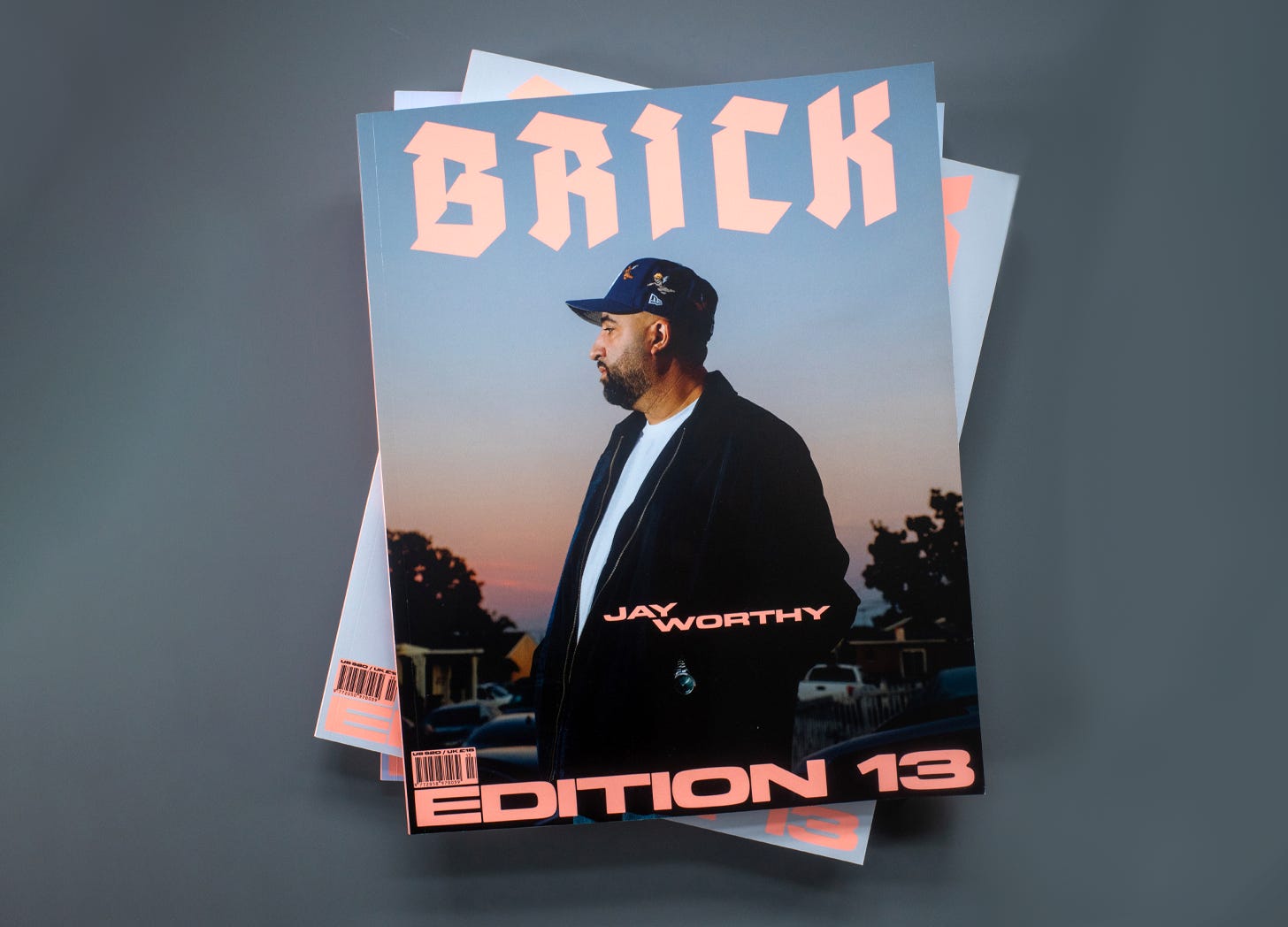
Edition 13 also features Venna, Obongjayar, John Glacier, Lexa Gates, Kwengface, and many more.
Click here to purchase the issue from our store,
or join our paid tier on Substack to receive a free copy as your welcome gift.
One of the first solid foundations came with Sean House, a producer he knew from Vancouver who matched Worthy’s taste for the classics with a passion for crate digging and unlocking obscure loops. “I always knew Sean, but we never worked together. And then I think when I came back home that time when I got out of County, I wanted to loop a sample and he was like, ‘yeah, come over and record.’ We did a few tracks, and I was just like, ‘damn, this dude loves the same shit I do,’” Worthy recalls, before excitedly continuing “I remember one thing that stuck out to me was he had the Charlie Brown Christmas album, and I love that shit. Vince Guaraldi. I love that piano. He was like, ‘yeah, this is the best shit ever.’ And I was like, ‘oh, bro gets it.’” Together they formed LNDN DRGS — named after the Vancouver pharmacy chain London Drugs — and began piecing together a sound rooted in lush samples, low-rider funk, and slow-burn R&B basslines “Sean was into sampling music,” Worthy remembers. “He would produce tapes for this rap group in Vancouver. We came together and made our own sound.” The group’s early work positioned them in a unique space: street-level storytelling laced with glossy funk and retro textures, a cinematic backdrop for Worthy’s narratives.
““As I was getting back into music, I noticed like, ‘shit, my sister actually bracking,’ like, ‘oh, let me move around with her and try to see what I can do.’” Moving in those circles brought Worthy into a different orbit, which led to connections with A$AP Yams and A$AP Rocky. “They were like, what!? How are y’all related, that don’t even make sense,” he laughs. “But they just fucked with me as a person.” That co-sign tipped the balance, and led Worthy to reassess his priorities - and his ambitions. “When Yams got behind me, I started seeing that the blogs and publications were understanding what I was doing, and that I had a unique sound. I was like, ‘you know what? This beats what I’m doing in the streets. If I can make a living out of this, let’s do it.’”
Soon after, Ghazi Shami and Nima Etminan at Empire gave him his first advance — $100,000. “To me, that was crazy. Nima and Ghazi kind of changed my life.” It was enough to make the leap. He left Los Angeles for New York, determined to commit fully. “When I moved to New York, I think I was 30,” he says. “I got a late start in this shit.”
New York gave Worthy a fresh lane. Though he was older than most rappers just breaking through, he quickly found himself running with A$AP Twelvyy and the wider Mob. The same credibility Yams had seen in him carried across - a distinct voice with real stories to tell. For an artist who had already lived multiple lives on the West Coast, the energy of Harlem felt like another initiation, another code to learn and adapt to. Worthy found himself recording, building, making up for lost time.
When he returned to Vancouver to start work on a full LNDN DRGS LP, it was with a renewed urgency. “I came back from that trip and was telling Sean like, ‘yo, we need to make this album,’” he remembers. They dived in, channeling the same crate-digging instinct that had first brought them together. Momentum was building for him, in a way it never had before. Everything was falling into place. Then, Yams passed. “I was heartbroken. I was like, what are we going to do?”
“Then, A-Trak hit me up out of nowhere,” Worthy says. At the time Fool’s Gold Records was a hotbed: Danny Brown, Kid Cudi, Action Bronson, all pushing the boundaries of what hip-hop could sound like. Their link-up came through a random encounter in Twitter DMs. “I don’t even think I had Twitter. I wasn’t a social media dude,” Worthy remembers. “I asked Sean for our Twitter login, and I just hit up A-Trak so say I appreciated his support on the music, because I saw him tweeting it. Suddenly, he calls me up and he’s like, ‘I just moved to LA. Pull up to my house. I pulled up, played him the album, and he agreed to put it out on Fool’s Gold.”
A partnership founded in mutual respect - then, strangely, another family connection. “Come to find out about ten years later or some shit, that me, A-Trak and his brother Dave from Chromeo are all related by marriage. It’s so crazy when you think about how many of my starts in music are kind of all family based.”
Fool’s Gold released Aktive in 2015. The album cut against the grain of the West Coast at the time, when trap-heavy production was everywhere - instead, they brought saturated samples, lush loops, and a distinctly cinematic feel, like a low-budget film scored with forgotten ’70s soul. It set them apart immediately, and gave Worthy a defined lane to operate in. While the casual listener may have regarded it as a throwback, on closer listens it felt closer to reportage - Sean’s samples set the scene, while Worthy wrote the first-hand accounts of street realities.
The same talent for charting his lived reality on record opened another lane, this time behind the camera. Through an introduction by Yams some years prior, Worthy was tapped to help Vice when they came to Los Angeles looking to shoot a documentary about Compton Bloods. “Yams used to be off his rocker,” Worthy says, laughing at the memory. “I love my brother, but he would hit me like, ‘Hey, yo, slime, yo, yo, yo. You ever heard of Vice?” When the filmmakers touched down in LA, Worthy took them through different hoods, showing them around, before officially joining the project as a producer. “Once they realized that I was tied in like that and these were my homies, they switched the whole thing and they just wanted to do it on our hood and chose three of my homies to spotlight. It came out beautiful and it helped everybody in a positive way.”
The documentary also put him on Alchemist’s radar, whose own work for Vice on Fuck, That’s Delicious established a familiarity. When Earl Sweatshirt and Vince Staples played Worthy’s music for Al at his house, explaining that he was “the older homie from the block on Fairfax,” Al reached out to collaborate. That connection soon turned into Fantasy Island, a 2017 collaboration that pulled directly from Al’s personal collection of Japanese soul records.
Next came G-Worthy, a tape with G Perico and Cardo. “I was like, ‘man, let’s make the new Westside Connection,” Worthy recalls. The concept was simple — one rapper from the red side, one from the blue, Cardo on production — but their collective output reverberated well beyond the streets of South LA.
At the same time, LNDN DRGS were expanding their output into a steady run of self-contained tapes — the five-part Burnout series, Umbrella Symphony with Curren$y, 2 P’z in a Pod with Larry June, collaborations with Left Brain and King Most. Each release was another example of Worthy’s world-building abilities, each tailored to fit perfectly around his collaborative co-star. “Generally speaking, I’ve always been good at creating bodies of work,” he says. “I’ve always liked to create themes that run throughout a record.”
That instinct, combined with his uncanny knack for making connections, eventually bled into a wider role. Over the last decade, Worthy found himself shaping albums for other artists too — booking features, sequencing, being the connective tissue that turns loose sessions into a cohesive project. You’ll find his A&R credit on DJ Quik and Problem’s 2024 collaborative LP Chupacabra, and he has his hand in projects with bonafide legends like George Clinton. Looking back, he admits he has essentially been doing A&R work all along, even if he didn’t label it as such. “I did that DJ Quik album in two weeks. The features all came in just like that,” he says, snapping his fingers. “You come to me as a one-stop shop, so I know what the fuck I’m doing.”
He pauses, and pulls out his phone. “You just reminded me, Terrace Martin’s new single is about to come out today, so I got to post that in 25 minutes.” Martin’s upcoming album is another that Worthy will be officially credited as A&R on - even if it’s a label that he still bristles at. “I said to Terrace ‘I don’t like the name A&R, I’m just trying to be the curator of this. And he said, ‘well, they don’t have no fucking role for the curator at the Academy, so that ain’t going to get you the Grammy. I said, ‘alright, I’m the A&R then!’ I’ll listen to Terrace — he knows what the fuck he’s doing. He got enough of those under his belt.”
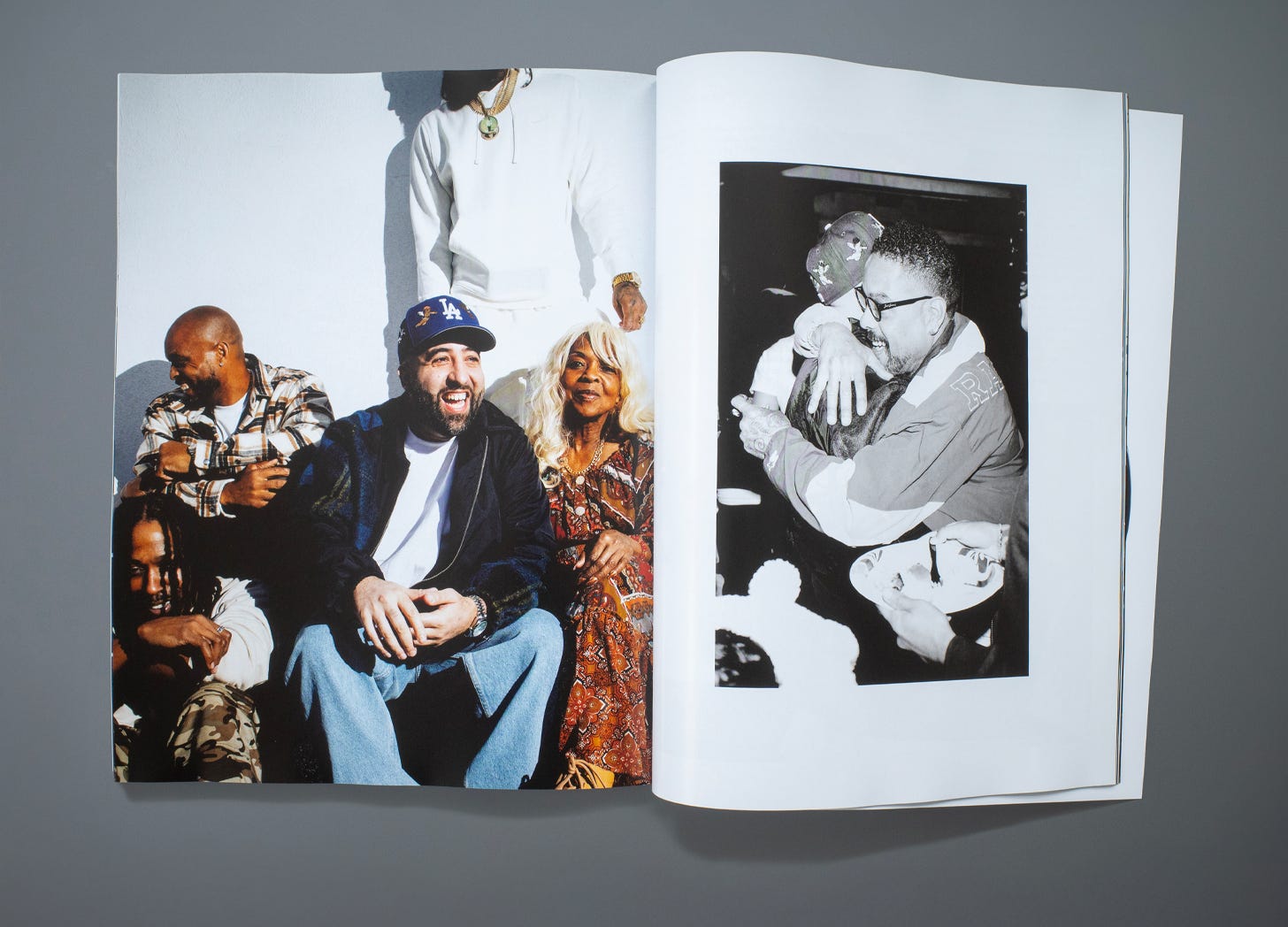
That work has found its rawest expression back home in Compton, with that same curatorial instinct turned toward the homies who had raised him. The result is Meet the Whoops, a crew project built around voices like Rosecrans HopOut, Slumlord Trill, Hitta J3, YS, and Mari Ruger. “That being where I’m from, I love the homies. They’re a huge part of my inspiration,” he says. “That neighborhood took me in. It is everything to me. I always wanted to be able to include them on this journey I’m on. And I just thought culturally, the world needed to see something shocking and real like this.”
The vision landed. Meet the Whoops caught a wave on release, and when Kendrick Lamar staged his landmark Pop Out show in Inglewood in 2024, the crew delivered a swaggering performance to a packed Kia Forum and a further audience watching around the globe. It was the most visible sign yet of what he’d been working toward: the neighborhood that raised him standing on a platform built for the world to see. “Poking your chest out there and saying you tough when you don’t need to — that ain’t never been gangster to me,” he says. “What’s gangster to me is changing your homie’s lives and being able to put them on stages with Kendrick Lamar, or do a documentary like Noisey Bompton and showcase homies that have talent in the hood. Bring them opportunities. At one point, that wasn’t my objective, but I figured I had a bigger purpose and started getting my shit together.”
That sense of purpose now feeds into his long-awaited solo debut. After years of working alongside others — amplifying the homies, shaping projects, connecting scenes — the spotlight has finally tilted his way. The album is called Once Upon a Time, and for Worthy it represents both a nod to the movies stacked on his shelves and a chance to frame his own story with the same weight, curation and care.
“I’m a big movie fan. The name of the album comes from one of my favorite films, Once Upon a Time in America. I was raised on storytelling rap — Ice Cube, Spice 1, Scarface, MCA, Nas. I want to take those things I grew up on and put them into my album.”
If the storytelling concept gives the record its narrative arc, Jay’s performance provides its cast. Worthy has always adapted to the room he’s in, accessing different auras, depending on the energy. “If you really listen to my music, you’ll hear a different character come out of me depending on the production,” he explains. “On some LNDN DRGS shit, it’s one side of me. With Conductor Williams, I get really in my pen and spit some bars. On some elegant soulful shit, you get another side. I just wanted to show I’m a well-rounded rapper and not just a rapper — a producer and a curator, somebody that can put together more than just a rap song.” This album is the first time those different roles appear on the same stage, a single project where Worthy can play out every character he’s developed across more than a decade of collaborations.
It might be because he’s spent the past two hours charting his personal history, but as our conversation winds down, Worthy is struck by the realization that it all feels like perfect timing. “Man, the time is now,” he says. “I feel like I’ve worked my whole career to kind of get this buzz, to where there’s eyes on me. A few years back, this album wouldn’t have hit the same. But certain things led me here — I needed to do the Pop Out. I needed to do my albums with Larry, with Curren$y. I needed to get the Alchemist belt. I needed to work with the legends, with Quik, with George Clinton. Now everybody is like, ‘who the fuck is Jay Worthy?’”
In his living room, the answer is already there, stacked tall on the surrounding shelves. VHS tapes worn soft with time, each one a story that survived because someone chose to keep it. Once Upon a Time is built with the same intention: a record built to be held, owned, savoured. An autobiography, formed as an object to sit on a shelf years from now and still carry forward the story of where he came from, and the people whose lives shaped his own.
